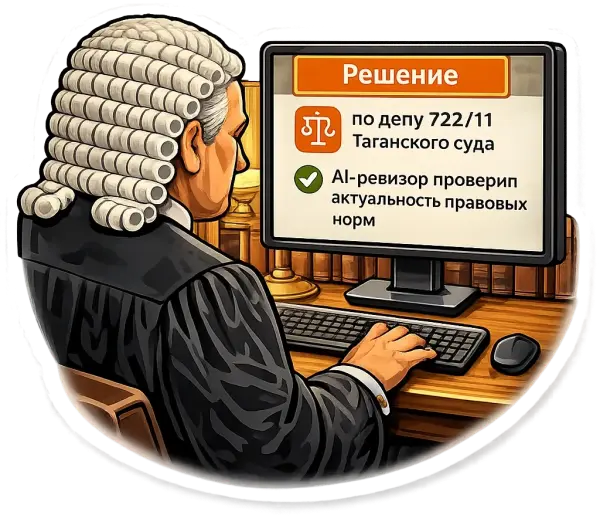
The role behind the name
Courts use different titles for staff who support judges: judicial assistant, law clerk, judicial clerk, legal adviser and research attorney. The common idea is assistance with research, records and drafting under the authority of a judge. A judicial AI assistant borrows that support model while making its limits explicit.
The term therefore describes a workflow, not a legal office. Software has no judicial authority, cannot assess a witness and cannot sign or issue an order.
Why a generic chatbot is not enough
| Generic chat | Document-first judicial assistant |
|---|---|
| Starts from a prompt | Starts from the uploaded record |
| May lose page provenance | Shows recognised and unclear pages |
| Often assumes a legal system | Stores an explicit jurisdiction |
| Produces a one-off answer | Keeps refinements within one case workspace |
The practical difference is traceability. The user should be able to see what entered the context, identify a missing page and continue within the same case rather than reconstructing the entire conversation.
The product workflow
Judicial AI Assistant accepts photographs, PDFs and common document files. OCR and extraction run first. A case-level context is compiled from the accepted pages, then the drafting model receives the user instruction, jurisdiction and record. If a page is blurred or not recognised, the user can replace it or add a clearer version and regenerate in the same case.
A deliberately limited promise
The product does not promise an official judgment or verified legal research. It promises a structured draft that can make review faster. Unsupported facts and authorities remain defects even when the prose is fluent. This is why the interface, prompts and editorial material repeat the same rule: verify before use.
For the broader field, read Judicial AI; for a product-oriented comparison, read AI for Judges.